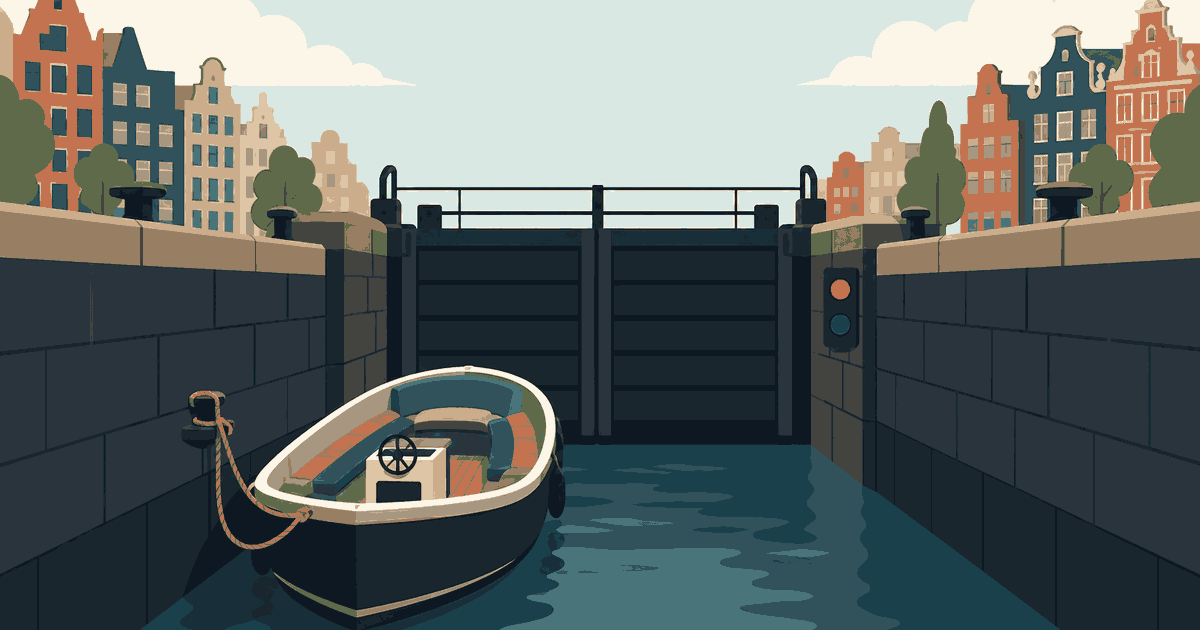
A lock (sluis) is just a water lift: a chamber with gates at each end that raises or lowers your boat between two stretches of water at different levels. The first time through can feel fiddly, but the routine is simple once you know it, and getting it right keeps the queue moving and your gelcoat unscratched.
This pairs with our canal rules guide; here we zoom in on locks and sluices specifically.
What a lock is for
Amsterdam's water sits at different heights in different places, and the canals are kept separate from the big open water of the IJ and the IJsselmeer for water management and flood safety. A lock bridges those levels. You enter one gate, it closes, the water level changes to match the far side, and the other gate opens. The best-known one for pleasure boaters is the Oranjesluizen complex at the eastern end of the IJ, the gateway between the city's water and the IJsselmeer and Markermeer beyond.
Who operates them
The locks and bridges in and around the city are run by Waternet on behalf of Amsterdam, while some of the larger structures on the national waterways are operated by Rijkswaterstaat. You don't work the lock yourself: an operator controls the gates and the signals. Your job is to follow them.
Opening times and any closures change, and that's the one thing worth checking before you set off. Live bridge and lock times and works affecting the waterways are published at vaarweginformatie.nl, and Waternet's boating service page is the place for operational notices.
Reading the signals
Locks use light signals, and they're as intuitive as a traffic light once you know the pattern:
- Two red lights: the lock is closed or not in use. Wait.
- One red and one green: the lock is being made ready. Get set, but don't enter yet.
- Two green lights: you may enter.
- A single steady red at the approach generally means stop and hold your position.
If a lock is self-service or call-operated, there will be a sign telling you how to request it. When in doubt, hold back, watch what other boats do, and don't crowd the entrance.
The routine, step by step
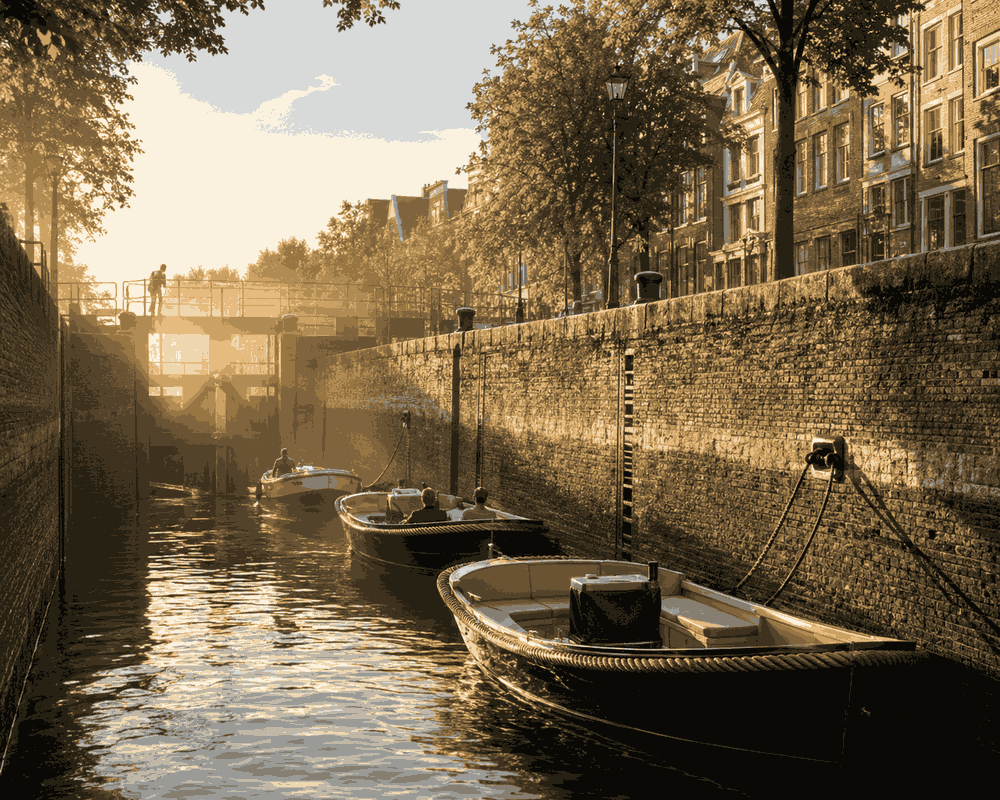
- Approach slowly and wait clear of the gates until you're signalled in. Keep the entrance free for boats coming out.
- Fenders out, lines ready on both sides before you go in.
- Enter on the green, move forward as directed, and tie up loosely to the bollards or floating posts in the chamber. Don't make the line fast and short; the water level is about to change, so keep enough slack to ride up or down.
- Hold steady while the level changes. Tend your lines, keep the engine ready, and stay aboard.
- Leave on the green when the far gate opens, in turn, without barging past slower boats.
A few courtesies
- Bigger and commercial vessels go first. Give them room and let them settle before you tie up near them.
- No swimming, no anchoring near a lock, ever. It's both forbidden and dangerous.
- Mind the suction and wash from larger boats in a shared chamber.
- If you're heading onto the IJ after the lock, remember it's working harbour water with its own rules and far bigger traffic.
Locking through is one of the small pleasures of a proper day out once the nerves wear off. Take it slowly, follow the operator, and you'll be on the other side before you know it.
Plan your route on the map. Lock times, closures, and operating rules change, so always check vaarweginformatie.nl and follow the signals on site. Floating Today is a curated guide, not an official source. See our Terms.