Amsterdam has well over a thousand bridges, and most of them are lovely to drift under. A few will stop you cold if your boat sits too high. Knowing your boat's air draught and how to read a bridge before you reach it is the difference between a smooth day and an embarrassing, expensive thud.
This sits alongside our canal rules guide and the locks and sluices one; here we focus on getting under the bridges.
Air draught, in plain terms
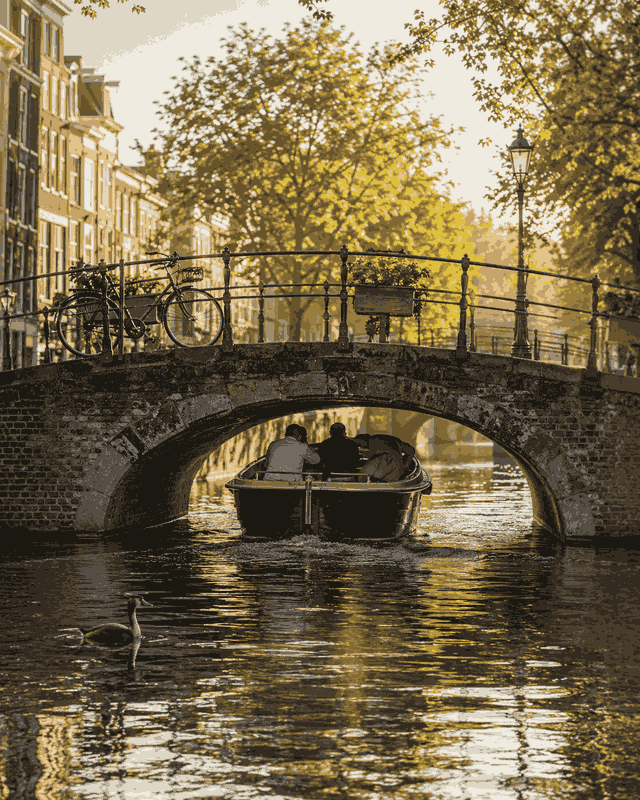
Air draught (doorvaarthoogte) is the height of the gap between the water and the underside of a bridge. Your boat's air draught is the height from the waterline to its highest fixed point: the windscreen, the radar arch, a raised canopy, an aerial. To pass safely, your boat's height needs to be comfortably less than the bridge's clearance, with margin to spare. If the two numbers are close, treat it as a no.
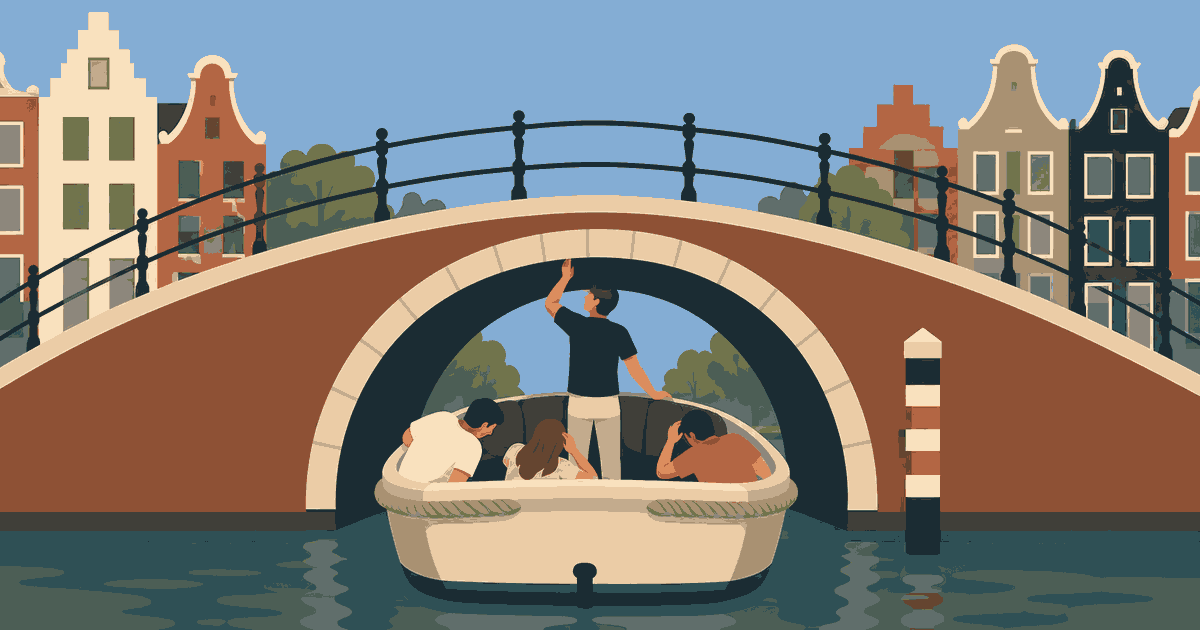
The centre's old canal bridges are famously low and arched, and the clearance under an arch is least at the edges and greatest in the middle, so line up for the centre of the span.
The water level moves the goalposts
Clearance isn't a fixed number. It changes with the water level, which rises after heavy rain or with wind pushing water into the system. A bridge you cleared with inches to spare in dry weather can be tighter the next week. When the level is up, give yourself more margin, and remember that a wake from a passing boat can momentarily lift you too.
Published bridge clearances and live opening information are at vaarweginformatie.nl, which is the source worth checking when you're planning a route that involves a low or opening bridge.
When a bridge has to open for you
Plenty of Amsterdam's bridges are opening bridges (beweegbare bruggen): they lift or swing to let taller boats through. These are operated by Waternet, not by you. Some open on a fixed timetable, some on request, and the request method (a marine VHF channel, a phone number, or an intercom at the bridge) is signposted at the bridge or listed on the waterway information sites.
A few things that make this go smoothly:
- Plan your route around the opening times, not the other way around. Off-season and at night, openings can be limited or by appointment only.
- Approach slowly and wait clear until the bridge is fully open and signalled.
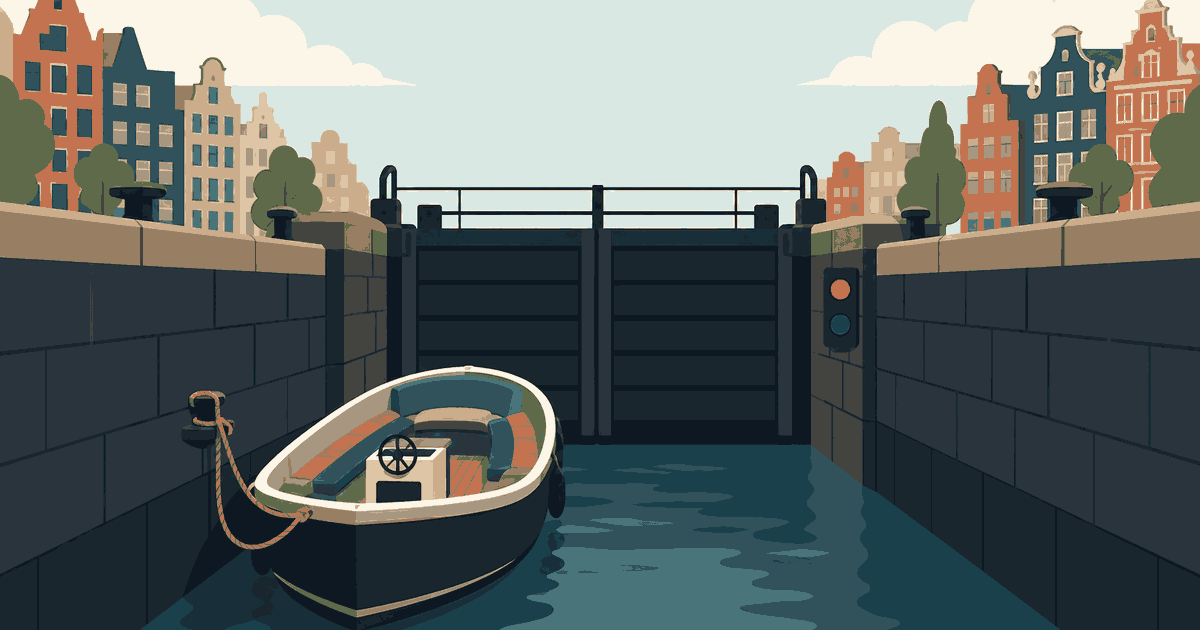
- Watch the signals, the same red and green logic as a lock: red means hold, green means go.
- Sailboats that need to keep the mast up follow the dedicated Staande Mastroute (standing-mast route); check current status before relying on it, as stretches of it close for works from time to time.
Measure before you go
The single best habit is to know your boat's real air draught and write it down. Measure to the true highest point with everything that's normally up. Then, before a tight bridge:
- Lower what you can. Drop the bimini, fold the windscreen, take down the aerial. Many sloops gain crucial centimetres this way.
- Shift weight if it genuinely helps a small boat sit lower, but never overload or unbalance it for the sake of a bridge.
- Send a spotter forward to eyeball the gap as you creep up, and be ready to back off. There is no shame in turning around.
- Aim for the high point of the arch and go dead slow.
Get those habits in and the bridges become the best part of the day rather than the nervous one.
Plan a route on the map. Bridge clearances and opening times change with the water level and the season, so always check vaarweginformatie.nl and the signs at the bridge. Floating Today is a curated guide, not an official source. See our Terms.