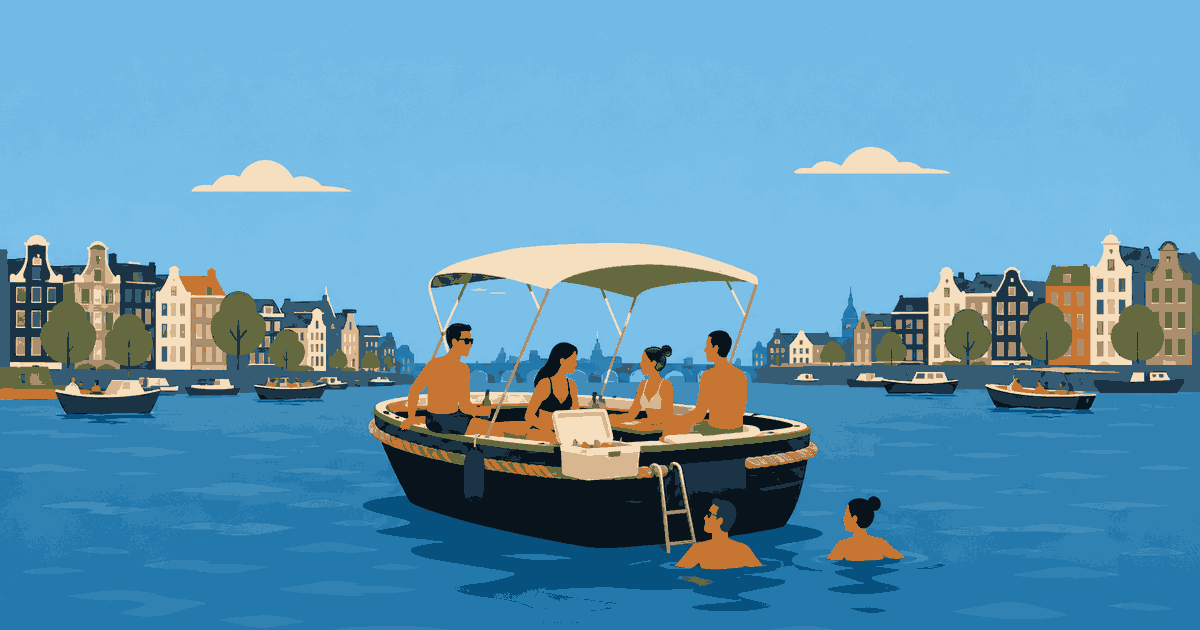
Good news first: on a normal day out, most of the places you'll want to stop don't charge you a cent. The bad news is that "free" gets muddled with "anywhere, any time," and that's how people end up with a fine or a tow. Here's the honest version of free mooring in Amsterdam.
For the full picture of the four kinds of tie-up and what the paid ones cost, start with our mooring guide. This one is just about the free stuff.
What "free" actually means
There are two separate money questions, and they often get tangled.
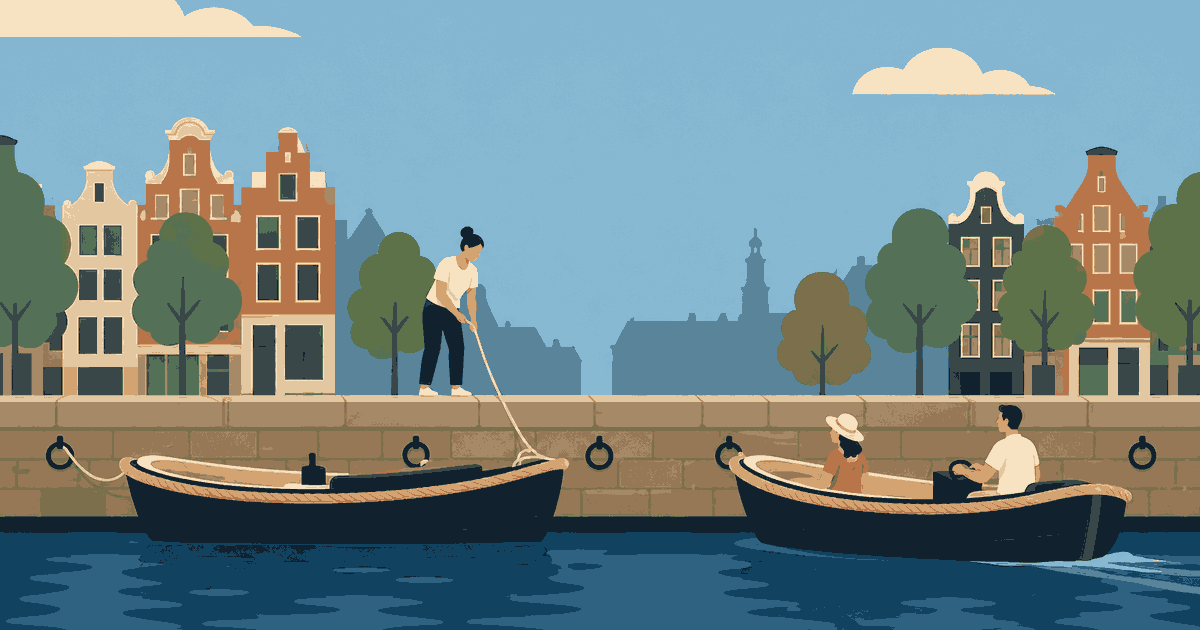
- The mooring itself. Public quay tie-ups, the canal walls with rings or bollards, are free to stop at unless a sign says otherwise. Marinas and private berths charge, because you're paying for a service or someone's spot.
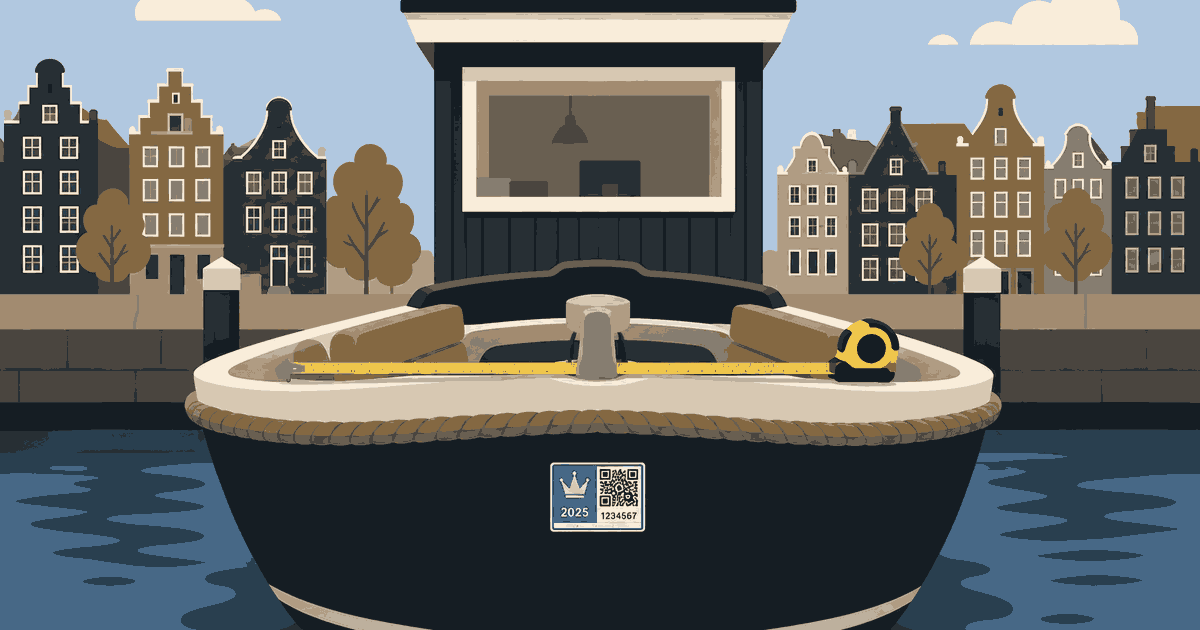
- The boat's permit. Separately, any boat on Amsterdam's water needs a valid vignet (vignette), free quay or not. So a free mooring is free to stop at, but you still can't be on the water at all without the permit. The City's vignette page has the current rates.
A restaurant's own dock is a third thing: usually "free" only in the sense that you're expected to be a paying guest while you're tied up there.
Where to find free tie-ups
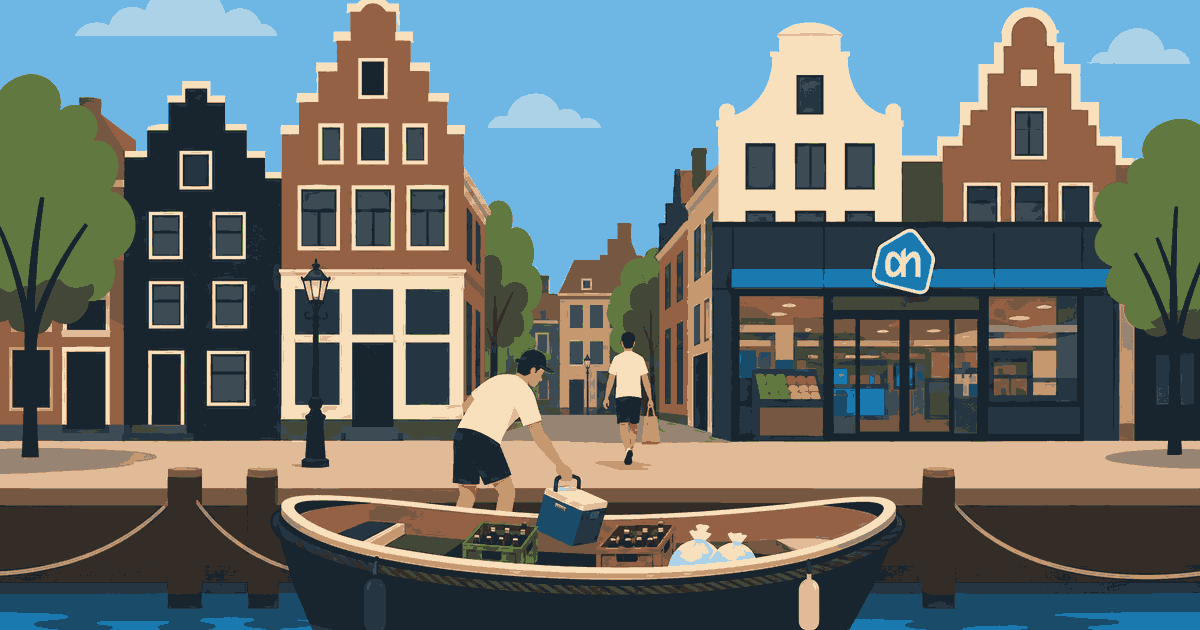
Free public quays are scattered all over town, and the fastest way to see what's near you is the map. Filter to mooring for the public tie-ups, then plan the stop around them: browse food and drink, swimming, or supermarkets and find the dock nearby.
A few rules of thumb on where the free spots tend to be:
- The Jordaan and western canals are pretty and central, but short-stop and busy. Good for a quick errand, less so for parking up all afternoon.
- The Western and Eastern Islands (Westelijke and Oostelijke Eilanden) are quieter corners just off the centre.
- Oost and the Amstel have more room, and the Amstel itself has the best run of waterside terraces.
- The west, along the Kostverlorenvaart strings the Oud-West canals down towards the lakes without fighting the centre's traffic.
If you'd rather follow a ready-made run, our boat-curated collections line up good stops by theme, like a sunny day in the west.
The honest catches
Free does not mean unlimited. The things that catch people out:
- Most free tie-ups are short-stop. Leave room and move on so the next boat gets a turn. Few are signposted for overnight; for that, see quiet canals for overnight tie-ups.
- No-mooring signs win every time. "Verboden af te meren" means no mooring, common under bridges and near swimmers' steps.
- Tie to fixed gear only. Rings, bollards, or poles, never trees, railings, or lampposts.
- The emission-free zone keeps petrol and diesel boats out of the centre, so a free quay you can see on the map may not be one you're allowed to reach under combustion power. Check the emission-free-zone rules.
- Boats over 10 metres can't moor in the city without an exemption.
- Don't block the channel, ferry landings, or ladders, and keep the noise down near homes.
The bottom line
Plenty of Amsterdam is free to tie up at, as long as you carry a valid vignette, read the signs, keep it short, and don't block anyone. Treat the map as a starting point and the quay sign as the final word.
Find free moorings on the map. Rules and time limits change by area and season, so always check the latest official rules and the signs on site. Floating Today lists spots as suggestions, not official guidance. See our Terms.