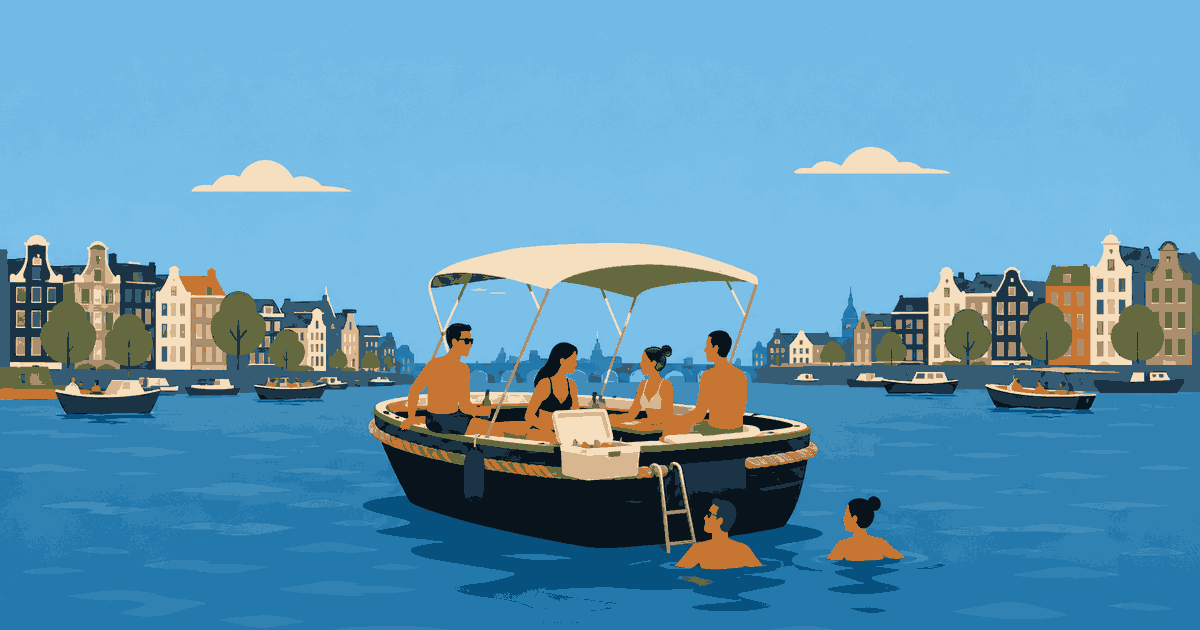
A good day on the water runs on what you brought aboard. Cold drinks, ice that lasts, something to eat when everyone suddenly gets hungry at once, and enough water in the tank to see out the afternoon. You can load all of it before you cast off, and for a big run you should. But half the pleasure of a boat in this city is topping up as you go: a bag of ice here, a crate of something cold there, fresh bread on the way past.
The catch is that provisioning from the water is a different game from nipping to the shop with a car. The question is not just "where is the nearest supermarket," it is "where can I actually tie up, step off with a trolley, and be back before the boat is in anyone's way." Here is how we think about it.
Where to shop from the water
Most of Amsterdam's supermarkets sit a street or two back from the canal, not on it. So the useful map is not every shop in the city, it is the handful you can genuinely reach by boat. We keep those on the supermarkets layer: the ones close enough to the water that a short tie-up and a two-minute walk gets you there and back.
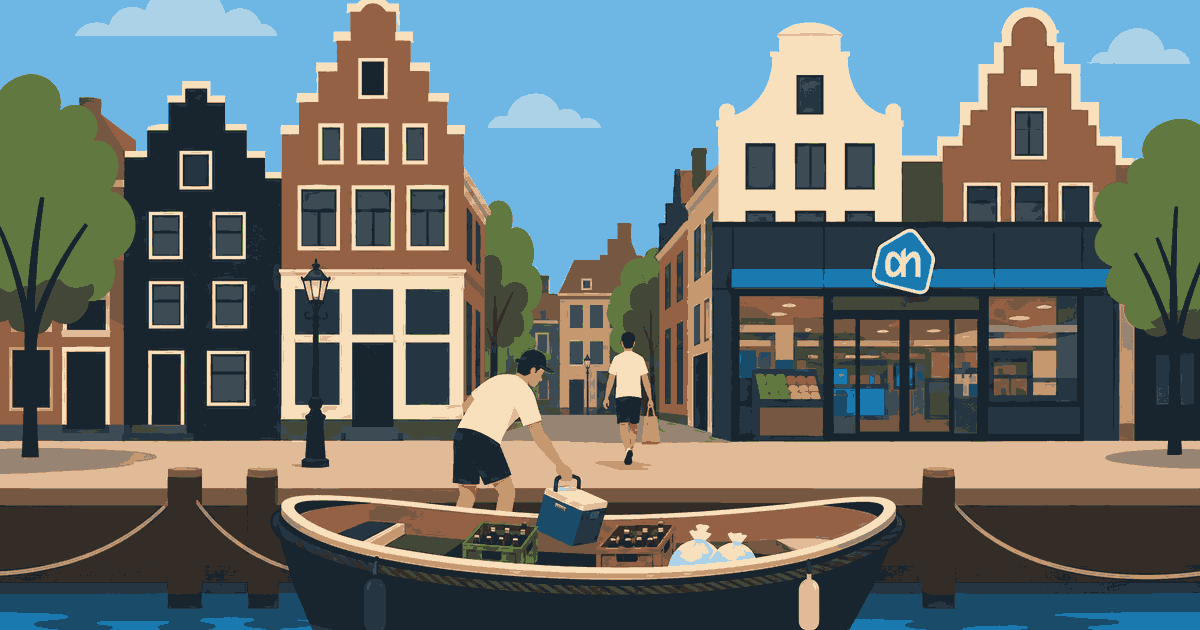
The gold standard is a shop with its own spot to land. Dirk dock West is exactly that, a supermarket with a dock right on the water, so the trolley and the boat are almost the same place. When you can plan a run around one of these, do. If you are starting a day out from the east side, the Albert Heijn at the Oosterdok sits handily by the water too, which is why it makes a natural first stop before you point the bow anywhere (it is where our Golden Hour Down the IJ route gathers its crew).
For everywhere else, the move is to tie up at a quay or a designated landing point near the shop and walk the last bit. The map tells you which supermarkets are close enough to make that worth it, so you are not casting about hoping there is somewhere to leave the boat.
Ice, drinks and the cool box
On a warm day, ice is the whole game. Bagged ice comes from most supermarkets, and the classic Amsterdam backup is a tabakszaak (a tobacco and convenience shop), plenty of which sit right by the water and stock ice, cold drinks and the odd forgotten essential. Our boat crews often grab a bag on the way through rather than carrying a cool box that is already half melted by lunch.
A cool box loaded properly lasts a great deal longer. Block ice outlasts cubes, so use blocks as your base and cubes for drinks. Pack the ice on the bottom, perishables and drinks on top, keep the lid shut, and stow the whole thing in shade rather than in the sun on the foredeck. If you are buying the heavy, bulky things, water, beer crates, big bottles, buy them at the shop closest to where the boat is tied. Your arms will thank you, and so will whoever is holding the lines.
Tying up to shop
This is where provisioning by boat lives or dies. Keep it short. Many of the handiest landing spots are an op-/afstapplaats, a designated place to load people and shopping on and off, not a place to leave the boat sitting. The signs on the quay are always the final word, over anything we or anyone else tells you, so read them before you step off.
The simplest system is one ashore, one aboard: one person does the shop while the other stays with the boat, ready to shift it if a bigger vessel needs the space. Docks and quays here are first come, first served, so if someone else is loading, wait your turn or find the next spot along rather than rafting up in the way. If you want the full picture on where you may and may not tie up, our guide on where to moor a boat in Amsterdam and the mooring layer are the place to start.
Timing your run
Dutch supermarkets keep generous hours and open seven days a week, with many trading well into the evening, so you rarely need to plan your whole day around a shop closing. Even so, it pays to check the hours of the specific store you are aiming for, because the smaller canal-side branches keep shorter days than the big ones.
Timing matters more for the water than for the shelves. The quays get busy on hot afternoons, exactly when everyone else has the same idea, so an earlier or later top-up often means an easier tie-up. Our rule of thumb: do the big shop at your home berth before you set off, when you have all the time and space in the world, and treat the runs along the way as quick top-ups for ice and fresh bits rather than the main event. A boat loaded before you leave is a calmer boat all day.
Topping up water, fuel and power
Provisioning is not only food. On a long day out the water tank runs down faster than you expect, especially with a thirsty crew. Amsterdam has public drinking-water points dotted about, which we keep on the other layer, such as the drinking-water tap at the Haarlemmerplein. Bring your own hose or a couple of containers, as they are taps, not filling stations.
While you are thinking about topping up, it is a good moment to sort power too. If you are running low, plan a provisioning stop near charging or fuel so you refill the boat and the cool box in one go. Our guide on charging or fuelling your boat covers where those points are and which suits your setup.
A simple provisioning routine
Put together, a smooth day looks something like this:
- Do the big shop at your home berth before you cast off, while you have space and time.
- Load the cool box right: block ice on the bottom, drinks and perishables on top, lid shut, kept in the shade.
- Mid-trip, top up ice and fresh bits at a boat-reachable shop, one person ashore and one aboard, and keep it quick.
- Refill the water tank where there is a public tap, and sort fuel or charge if you are passing a point anyway.
- Bag it, stow it low and central so the boat sits level, and cast off before the quay needs the space.
None of this is complicated, it is just a rhythm you settle into after a season or two. Get it right and the boat always has cold drinks, dry snacks and a full tank, and nobody has to cut the day short for a shop run.
A last honest word. The signs on the quay decide where you may tie up, not us, so give them the final say every time. Do not leave the boat unattended while you shop, a quick landing is fine but a long one is asking for trouble. And while the map shows you what is genuinely reachable by water, a quiet quay and a short walk will often beat fighting for the one dock everyone else wants. Plan the map around your route, keep the cool box packed, and the rest takes care of itself.