Utrecht looks like it should be the easiest city in the Netherlands to arrive at by boat. The Oudegracht runs straight through the middle of it, the werven (the sunken wharf level below the street) are lined with terraces, and on a warm afternoon you will see boats sitting right beside them.
Then you read the rules, and the picture changes.
The one rule that catches everyone out
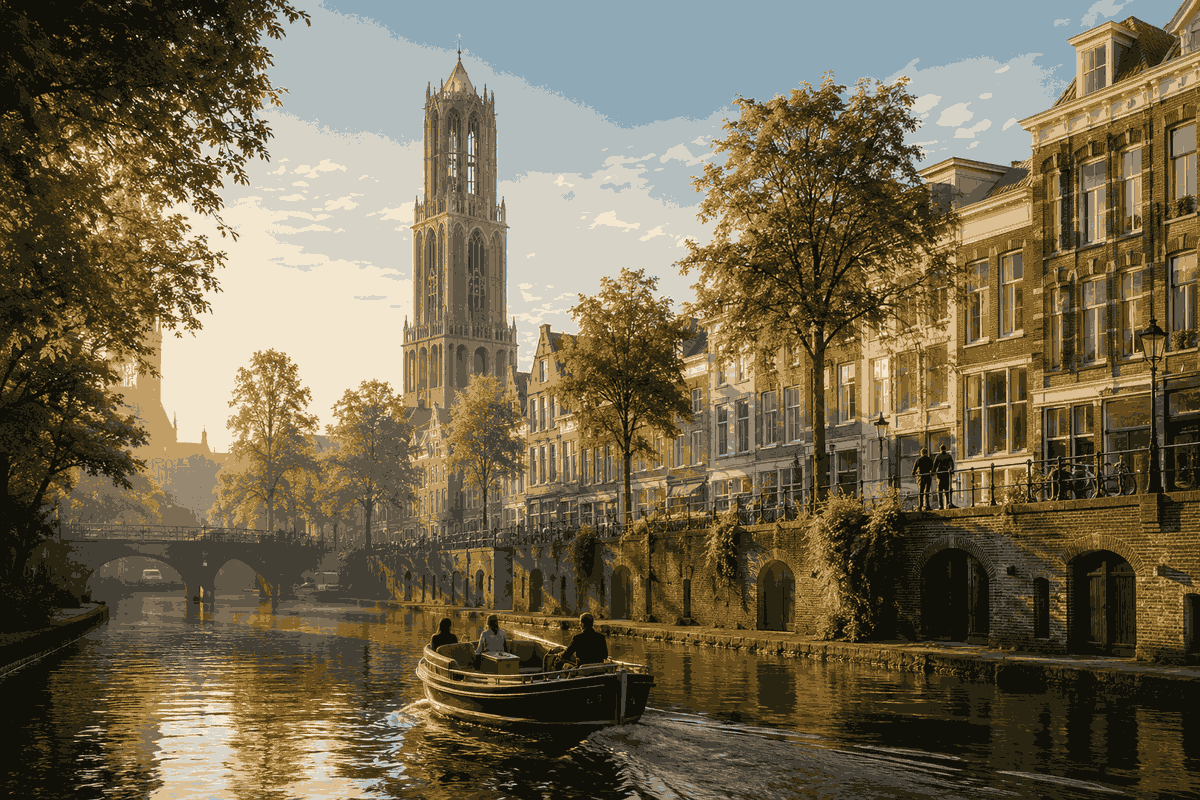
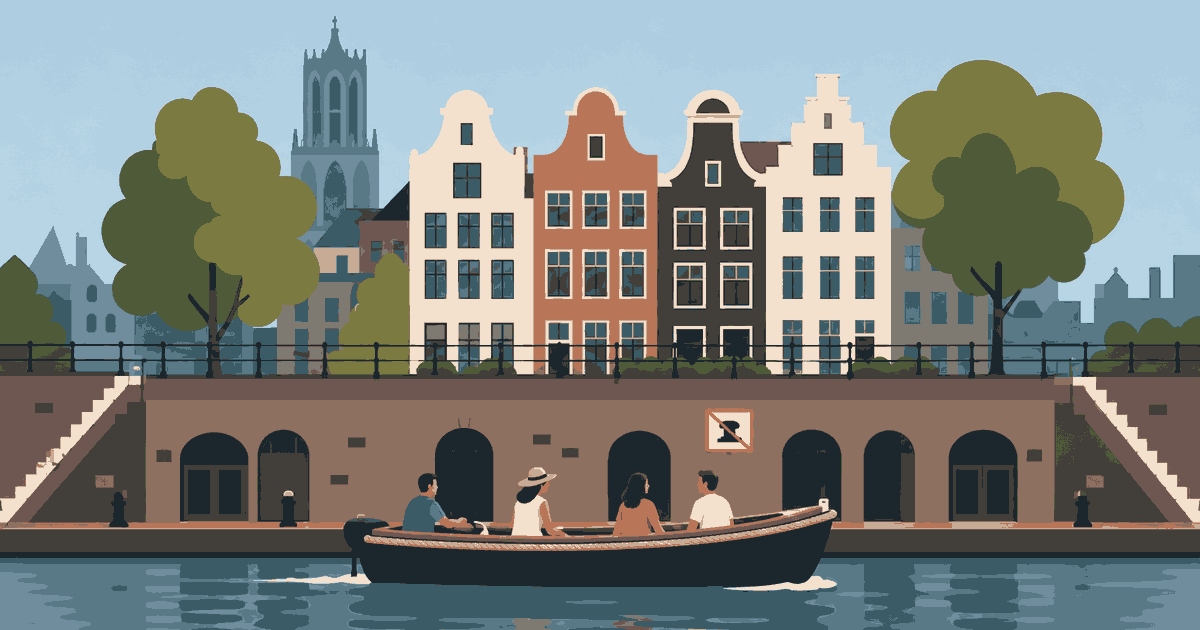
Mooring on the Oudegracht is forbidden, and that includes short stops. The gemeente puts it plainly: "Op de Oudegracht mag u niet aanmeren. Dit geldt ook voor kort stoppen."
Passage on the Oudegracht is also limited at the moment because of works on the wharves; check Vaarweginformatie before you plan the loop.
This is not a technicality about overnight stays. There is no legitimate way to tie up along the most famous canal in the city, even for ten minutes to drop someone off. The terraces on the werf are for people who walked there.
We map several Oudegracht places worth knowing, like Café De Morgenster and 't Oude Pothuys, a music cafe in a vaulted werfkelder (a cellar built into the wharf wall). Treat all of them as walk-in. Pass by water, moor where you are allowed, and come back on foot. It is a ten-minute walk from almost anywhere in the centre.
Where you can actually stop
Two kinds of place, and the difference matters.
Up to 6 hours, no overnight, and you may leave the boat:
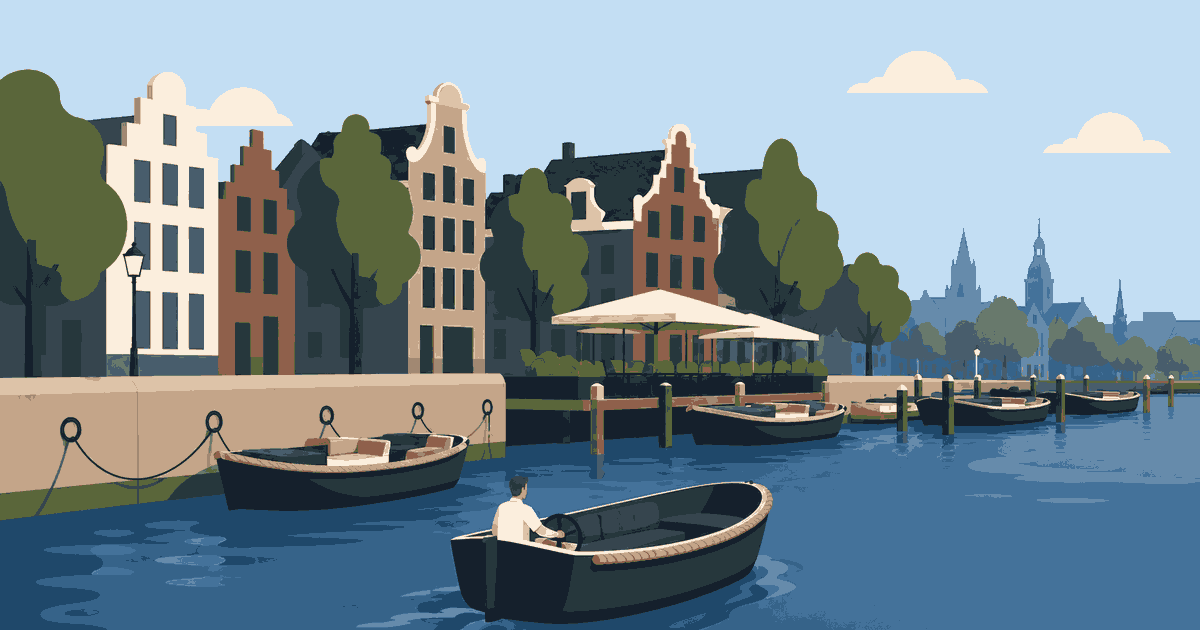
- The Oosterkade, on the east bank of the Vaartsche Rijn. This is the good one. You tie up at the wooden steiger (jetty), not the high quay wall; it has a public boat charging point on it, and it is lined with places you can actually reach by water. Tour and rental boats share it, so expect company.
- Designated stretches of the western Stadsbuitengracht, the outer canal ring.
Anywhere else, a short stop means someone stays aboard, and only where it is signed.
Longer, up to 72 hours including overnight: two passantenhavens (visitor harbours), at the Weerdsluis by the Monicabrug and on the Catharijnesingel by the Bartholomeibrug. Both have power, water, toilets and showers, and somewhere to put your waste. For 2026 the gemeente lists 26.25 euro a day for an emission-free boat up to 10 metres and 37.50 euro for a fuel boat the same size, plus 2.60 or 3.75 euro for each metre over 10.
A permanent berth is a different world: it needs a ligplaatsvergunning (a mooring permit), and there are none available.
Height gates your route, not width
This is the planning constraint people underestimate. Utrecht's inner-city vaarkaart (navigation chart) gives three routes with three very different clearances:
- Oudegracht route: roughly 3.20 m
- Western singel route: about 2.50 m, with the visitor harbour reachable to around 3.00 m
- Eastern singel route: about 1.90 m
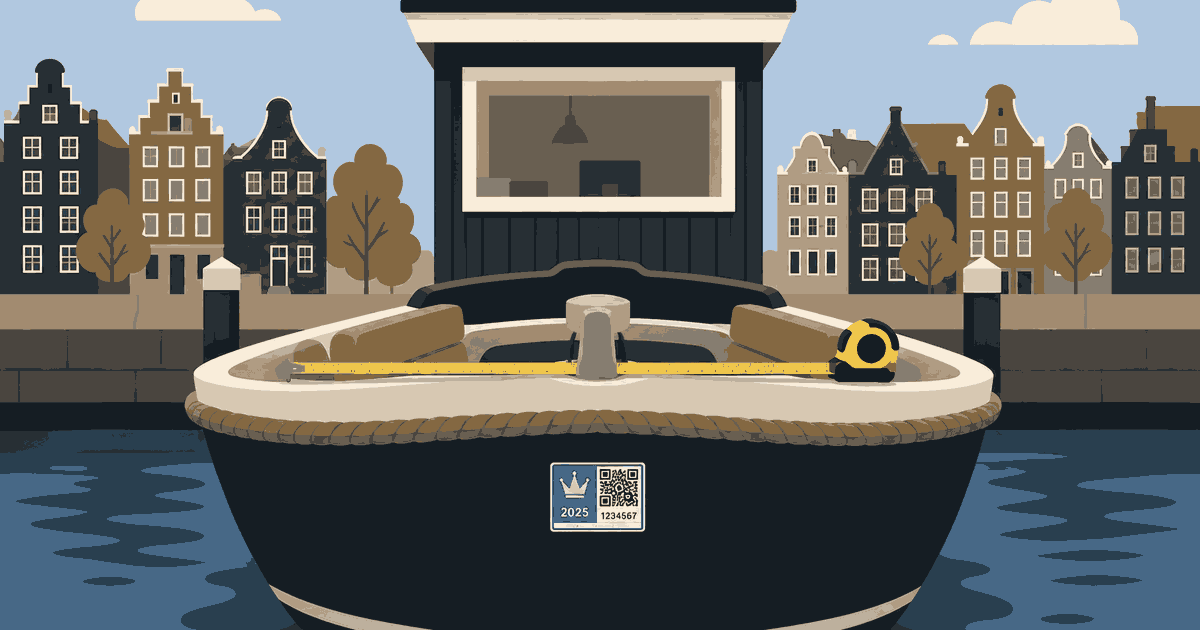
If your boat has a canopy up, that eastern figure will stop you. Measure your air draught before you plan a loop rather than discovering it at a bridge with a queue behind you. Our bridges and headroom guide covers how to measure properly.
Locks, and being late
The Weerdsluis is the lock between the Vecht and the Oudegracht, and the Muntsluis sits on the southern side.
Passage through the Weerdsluis costs 9.20 euro, or 6.45 euro for an emission-free boat. Lock and bridge service runs 09:00 to 20:00 from 16 April to 15 October, closing earlier at the edges of the season (16:00 in early April, 16:30 in late October). From November to March it runs on request only, 24 hours ahead, on working days. Report at the Weerdsluis at least 30 minutes before service ends.
Outside those hours it gets expensive fast: the gemeente charges 200.25 euro for the lock and 132.85 euro per bridge. Plan to be through with time in hand. If you want the general technique for working through a lock without stress, we wrote that up here.
Speed, crew, and the electric rule
- 4.5 km/h on city water, 6 km/h on the Vecht. Slower than Amsterdam.
- Maximum 13 people aboard, including whoever is steering.
- Keep right, watch your wash, and give way to commercial and tour traffic.
- The Kromme Rijn is electric-only from the Waterlinieweg to the Werkhoven lock, and has been since 1 January 2025.
Utrecht's pricing quietly pushes the same way: an emission-free boat pays less at the lock and less in the visitor harbour. There are six public charging points around the city, open 08:00 to 18:00.
The stretch that actually works by boat
If you want the version of Utrecht where you arrive by water rather than parking and walking, it is the Vaartsche Rijn at Rotsoord and the Oosterkade, south of the centre. No mooring ban, an official 6-hour zone, charging, and a run of waterside places: BROEI and Orloff aan de Kade on the Oosterkade, then Taplokaal Gist at Rotsoord, which is the one place in the city that openly invites you to dock at its terrace and order from the boat.
North of the centre, above the Weerdsluis, there is a wooden deck on the Vecht where boats gather on hot days. Worth knowing about, and worth being honest about: it is informal, it is not a monitored swim location, and it sits in live boating water.
Open the Utrecht map to see the lot.
A note on rules
Fees, dates and zones change, and Utrecht's water is managed by the gemeente alongside the regional water authority. Everything above comes from the gemeente's own recreational-boating pages and its inner-city vaarkaart, checked in October 2026. Re-check utrecht.nl before you rely on a euro figure or a date, and follow the signs on the water: signage always wins over any map, ours included. Floating Today lists spots as suggestions, not permits. See our Terms.