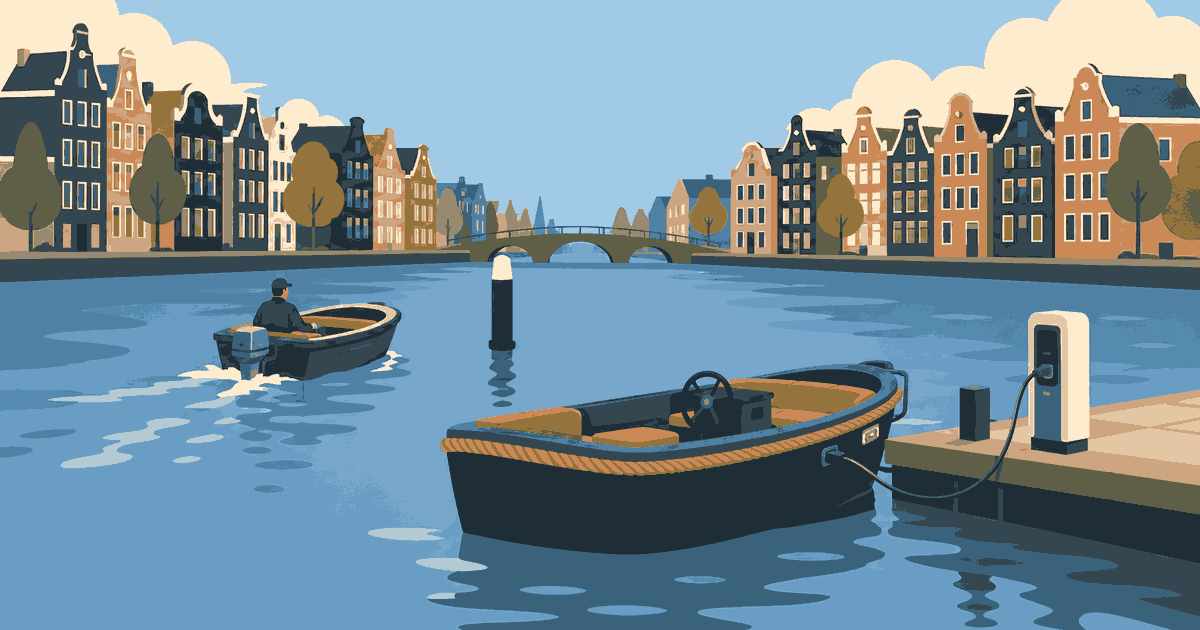
If you're renting a boat in Amsterdam, the odds are it's electric. Almost every self-drive rental in the city runs on a battery now, and on the small sloepen (open sloops) most visitors want, it's close to the only option left.
That isn't a green gesture. It's the city's rules, and it's the reason electric is also the better boat for the day you're planning.
Why nearly everything is electric here
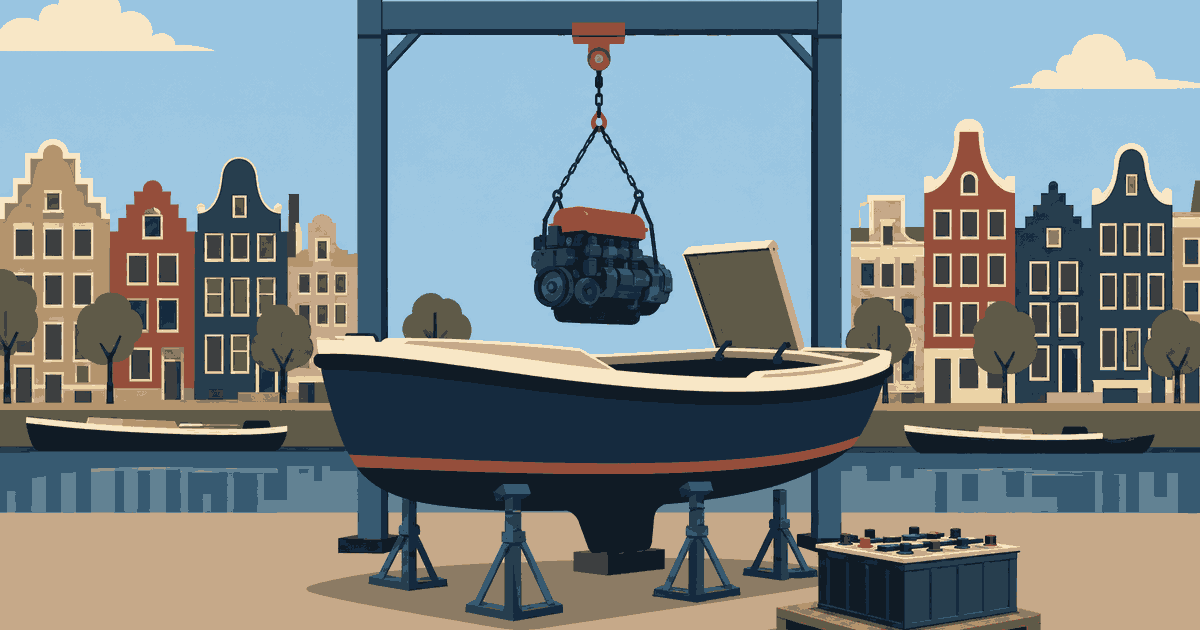
Amsterdam's inner waterways are an emission-free zone, and the city intends to extend it to all inner waterways by 2030 under its Clean Air Action Plan (Actieplan Schone Lucht). Commercial passenger vessels have already had to sail emission-free since 1 January 2025.
The rental fleet moved early because a combustion boat is a shrinking asset here. So the practical position for you as a renter is simple: an electric boat can go where a combustion one increasingly can't. You are not choosing a fuel type so much as choosing which canals are open to you.
The full picture of who has to convert and by when is in our emission-free zone guide, which is written for owners but explains the zone properly.
What it's actually like to drive one
Better than you expect, and easier.
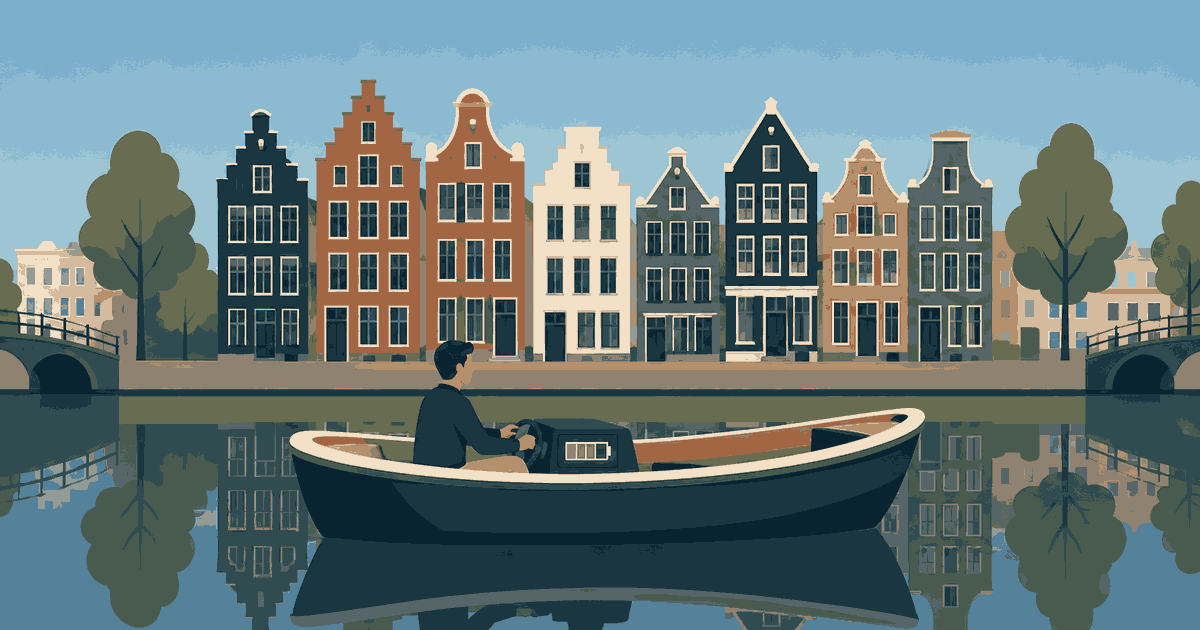
- It's quiet. This is the real difference. No engine drone means you can hold a conversation at normal volume, hear the city, and not annoy everyone whose bedroom window faces the gracht.
- There's no gearbox drama. Throttle forward, throttle back. Response is immediate, which makes low-speed manoeuvring near a quay noticeably more forgiving than a petrol outboard.
- It's slow, and that's fine. The general limit on Amsterdam's water is 6 km/h. Every rental sloop can do that comfortably, so you never want more.
- There's nothing to refuel. You pick it up charged and hand it back. No jerrycan, no fumes, no petrol on your hands before lunch.
You do not need a licence for any of this. A boating licence (vaarbewijs) only applies to boats over 15 metres or capable of more than 20 km/h, and no rental sloop is either. More detail in the renting guide.
Range: the one thing worth asking about
This is the only place electric rental genuinely differs from what you might assume, and it's the question people forget to ask.
A rental boat is normally handed over with enough charge for the block you booked, and for pottering round the canal ring that is never a problem. It becomes a real question when:
- You want a long run out and back, to the Nieuwe Meer, out onto the IJ, or up towards Ouderkerk on the Amstel.
- You've booked a full day rather than two or three hours.
- You're carrying a full boat of people, which costs you range like it costs a car.
- It's cold. Batteries give less in low temperatures, which matters in the shoulder season.
Say where you're planning to go when you book. A good company will put you on a boat with the range for it, or tell you honestly that your plan is too ambitious for the battery. That answer is worth more than a bigger boat.
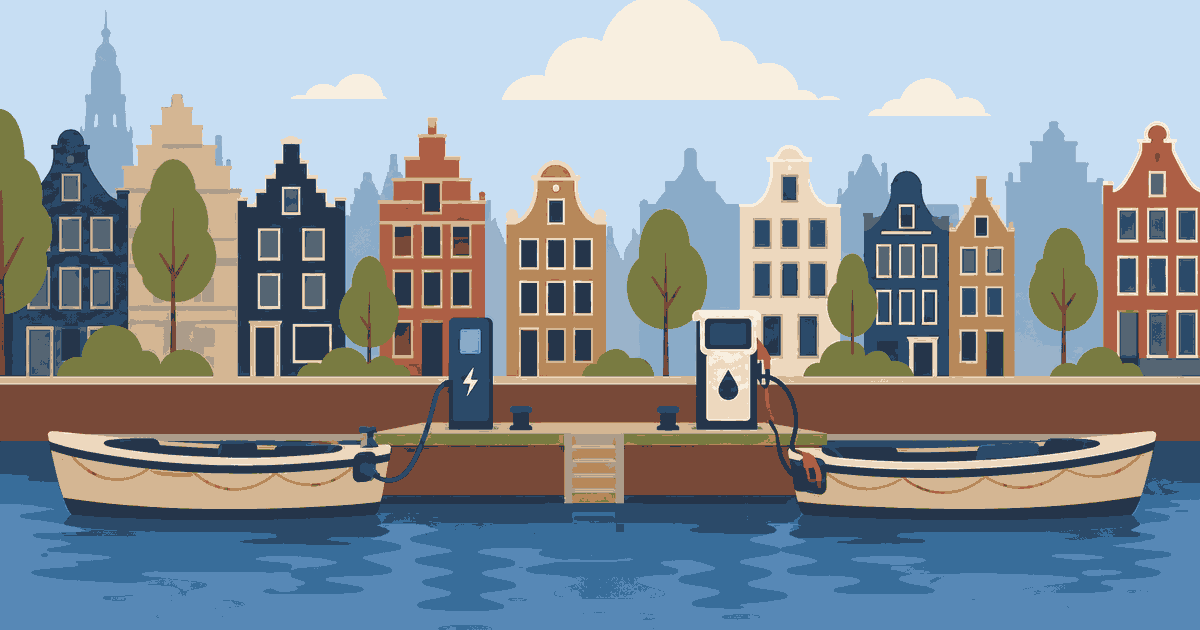
Amsterdam does have charging points on the water, but topping up mid-hire is not usually part of a rental arrangement. Treat the charge you're given as the day's budget.
What it costs
From the companies in our rentals directory, a self-drive electric boat runs roughly €80-120 for a two-hour rental, depending on the season, the boat size and the company. A 2-hour minimum is normal, and some price by the block rather than the hour, which is better value for a proper afternoon.
Electric costs no more than a combustion boat did. If anything the running cost is lower, and companies rarely charge separately for the electricity.
Prices move with the season, so take these as the shape of the market rather than a quote. The directory lists each company's own current range.
What to check before you book
- Range for your plan, as above. The single most useful question you can ask.
- How many people the boat is licensed for. It's a safety limit, not a guideline.
- Whether there's a canopy or shade. An open sloop in full August sun is punishing, and this is the thing people regret most.
- Deposit and what releases it, usually held on a card.
- Return time and the late fee. Electric boats are often turned around tightly between bookings.
- Whether life jackets are aboard, and child sizes if you need them.
Where to go once you've got one
Quiet boats are wasted on a queue. The canal ring on a hot Saturday afternoon is a slow traffic jam, and the whole advantage of electric, the calm, disappears in it.
Better: go early, or go outward. Pick a tie-up before you leave rather than hunting for one, put a waterside café in the middle of the route, and add a swim spot if it's warm. Our boat-curated collections string these together by theme, like a sunny day in the west or golden hour down the IJ.
Compare the rental companies, or open the map and plan the stops first.
A note on rules
Speed limits, the emission-free zone and permit conditions change, and more than one authority manages Amsterdam's water. Check the current rules before you go, and follow the signs on the quay: signage always wins over any map, ours included. Floating Today lists spots as suggestions, not permits. See our Terms.