Haarlem is close enough to Amsterdam that people expect the same rules. They are not the same, and the differences decide your day: the bridges open in convoys, there is no visitor vignet (a sailing permit for visiting boats, as Amsterdam sells), and passing the bridges costs a fixed fee.
The bridges open in convoy
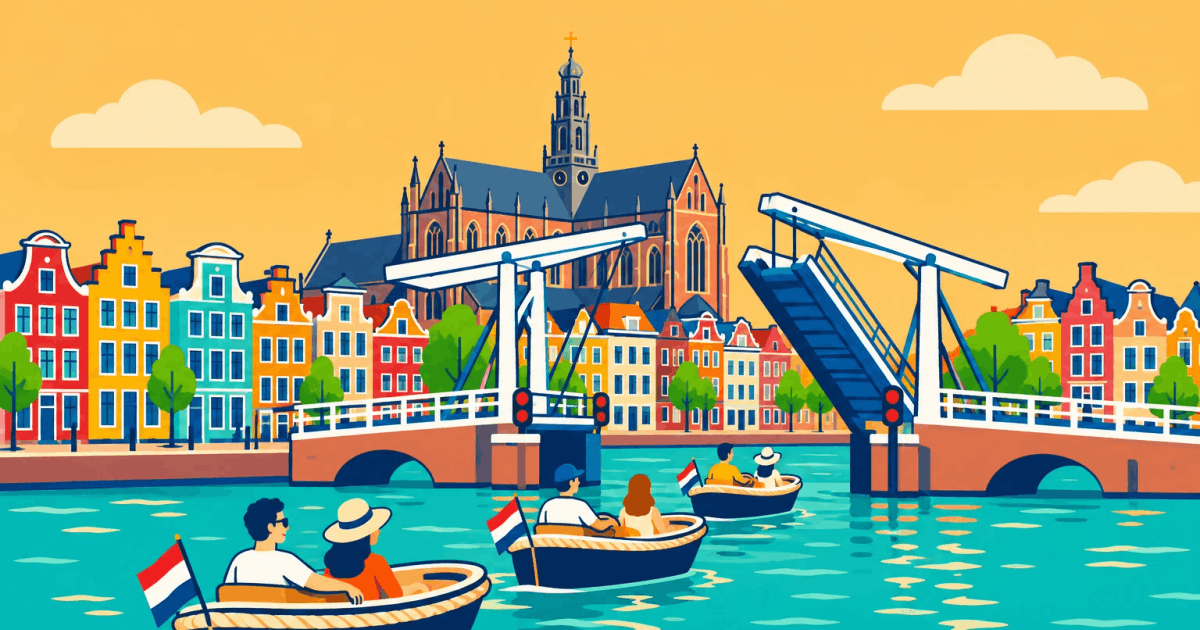
The Spaarne runs straight through the city, and about ten movable bridges cross it in the centre. They do not open on demand. The havendienst (the city's harbour service) takes boats through in convoys.
- Report at the Waarderbrug coming from the north, or at the Buitenrustbrug coming from the south. Works can close a reporting bridge: the Waarderbrug, for example, was closed to all boats from 2 to 8 November 2026, with work on it planned into early 2027. Check the city's page for current closures before you go.
- Be there before 21:00 on a weekday or 20:00 at the weekend if you want to cross the whole city. Boats can still come in until 22:00 on weekdays and 21:00 at weekends.
- Report when you are at the bridge, on VHF 18 or 023 511 3310.
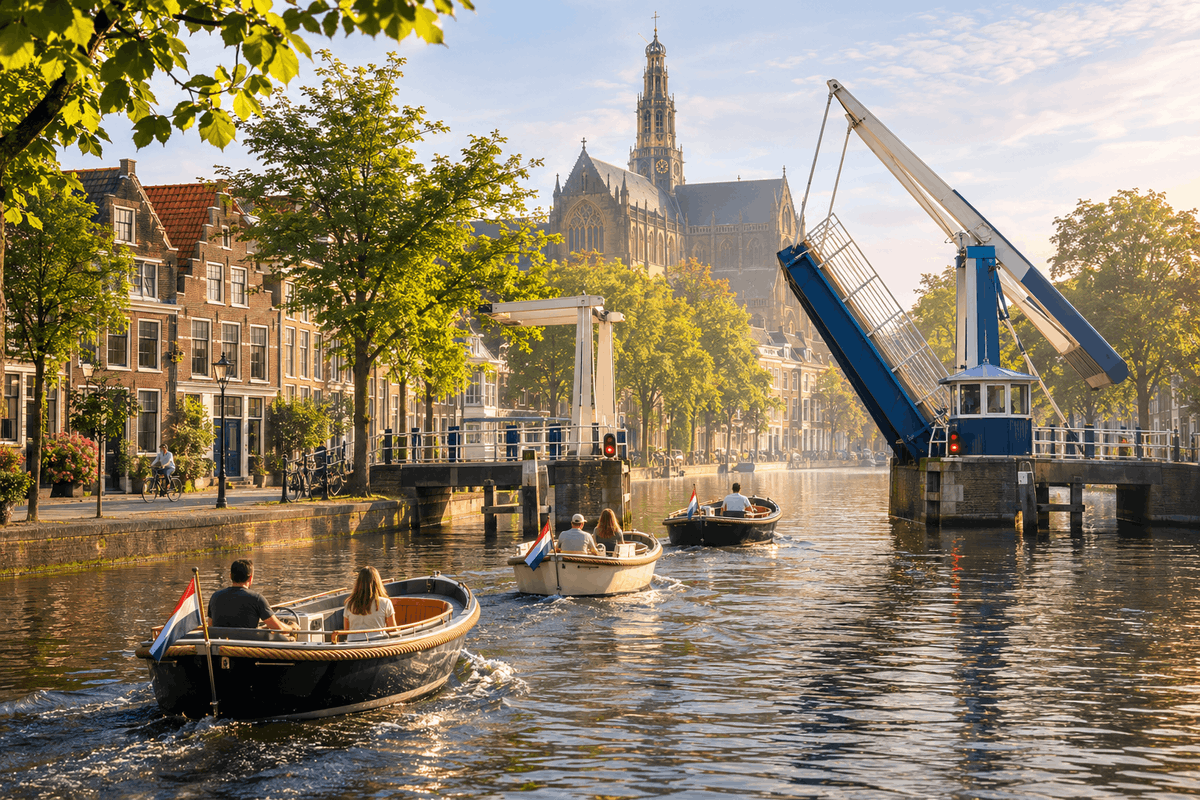
The bridges open on weekdays from 9:00 to 16:30 and from 18:30 to 22:00. At weekends from late March to the end of October they run from 8:00 to 21:00. From November to late March: Saturdays 9:00 to 15:00 only, no service on Sundays. The Spaarnespoorbrug (the railway bridge) opens at weekends at six and thirty-six minutes past the hour.
The city publishes the times on its passenger page. When we checked in November 2026, the bridges were due for works and changes to how they are run over the following years, so re-check the page before each season.
Works can shut a bridge for a week or a season. In autumn 2026, for example, the Waarderbrug was closed to all boats from 2 to 8 November and open again from 9 November, with work on the bridge planned into early 2027, and the Leidsevaart was closed at the Westelijke Randwegbrug from 26 October 2026 while a new bridge was built. The city lists every current closure on the same page, so check it before you go.
Headroom under the closed bridges
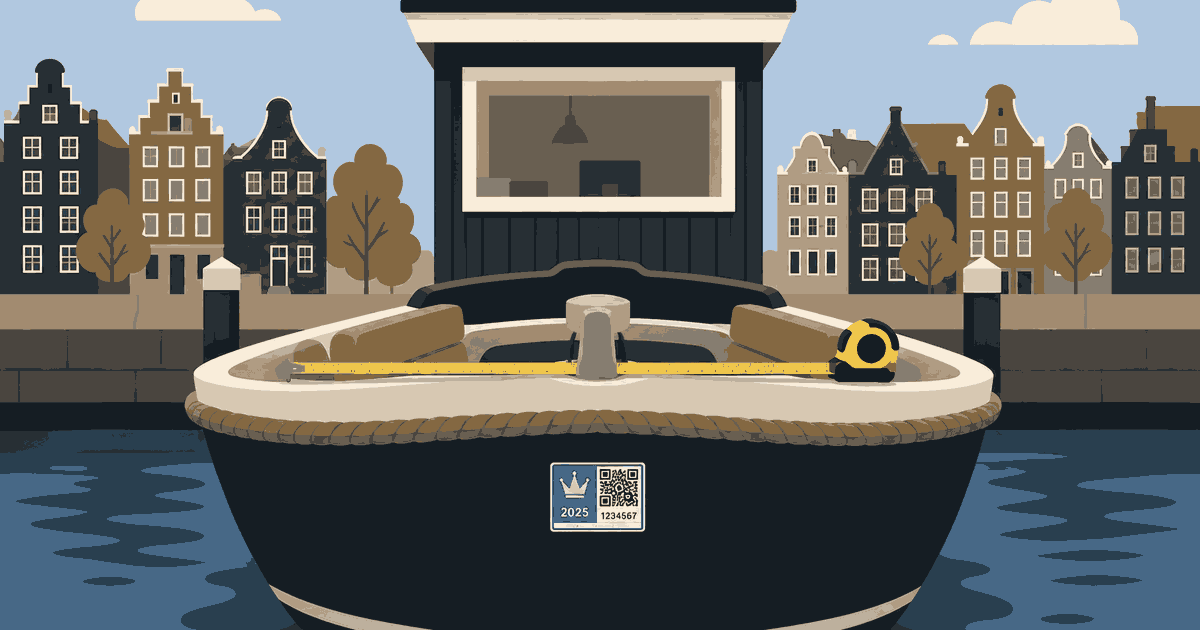
You only need the convoy if your boat is too tall to pass under a bridge while it is closed. With the bridges down, the lowest point through the centre is about 2 metres. Know your air draught (the height from the waterline to the highest point of the boat, with the canopy and any windscreen folded down): below 2 m, a small open boat can pass the centre without waiting for the bridges to open.
The headroom under each closed bridge on the Spaarne, north to south, at normal water:
- Schoterbrug: 6.2 m, the lowest figure the city gives (Rijkswaterstaat's lowest is 6.3 m); the two disagree on which span is lower, so read the board
- Waarderbrug: 2.0 m
- Prinsenbrug: 2.85 m
- Spaarnespoorbrug (the railway bridge): 4.3 m
- Catharijnebrug: 2.0 m
- Gravestenenbrug: 2.55 m
- Melkbrug: 2.0 m
- Langebrug: 2.15 m
- Buitenrustbrug: 2.15 m
- Schouwbroekerbrug: 4.31 m (the city gives 4.45 m)
These are Rijkswaterstaat's figures from its FIS, the national waterway information service on vaarweginformatie.nl. Where the city's passenger page gives a different height, we list the lower of the two: at the Gravestenenbrug, for example, the city measures 3.45 m in the middle of the span but 2.75 m at the sides. Every bridge carries a height board, and the board is the figure to trust on the day.
No vignet, but a bridge fee
Haarlem has no visitor vignet. Instead you pay bruggengeld (a bridge fee) when you pass at least one bridge opening. It is one fixed amount, however many bridges open for you: 1.33 euro per metre of boat, with a minimum of 7.96 euro in 2026. If you are already paying to moor in the city, there is no bridge fee on top.
The fees are set in the city's yearly tariff table (the 2026 one was adopted on 18 December 2025), so check the new table before you count on a figure.
Speed
6 km/h on all of Haarlem's water, the Spaarne and the city canals included. That is the figure on Haarlem's water map, published with the details of the havendienst (harbour service). Outside the city, on the Ringvaart or past the Spaarndam locks, other authorities set the rules: follow the signs there.
Where a visitor can stay
You may only moor at places in the city's ligplaatsenplan (the mooring plan). Three kinds matter to a visiting boat:
- Visitor berths: stay up to 21 days in any 3 months.
- Short stays: up to 3 hours, then at least an hour away before you come back.
- Charging berths: electric boats only, up to 24 hours while you visibly charge, then 12 hours away.
These limits are in the Verordening Haarlemse Wateren, the city's water by-law (articles 16, 19 and 22). The signs at the quay say which is which, and the signs win. The city publishes its berth fees, and the tourist tax per person per night, on its passenger page.
What you may not do
- Jet skis and waterscooters are not allowed on Haarlem's water, the city's passenger page says.
- Amplified music and a running generator on board are not allowed (water by-law, article 30).
- Anchoring is only to prevent damage or a collision (article 34).
- Sailing under sail is not allowed between the Waarderbrug and the Buitenrustbruggen (article 33): take the sails down through the centre.
Spaarndam and dry summers
North of the city the Spaarne meets the Noordzeekanaal at Spaarndam, through the Grote Sluis and the Kolksluis. In a dry summer Rijnland, the water board, cuts back the locks to save fresh water. In July 2026 the Grote Sluis opened for pleasure boats only three times a day and the Kolksluis closed completely (NH Nieuws). Heat can stop the city bridges too: on 26 June 2026 they stayed shut from 10:00 to 21:00 (Rodi Haarlem). In summer, check the day before you plan a route through Spaarndam.
The water level
Haarlem's water is part of the boezem (the regional storage water) of Rijnland, the water board, which holds it close to NAP (the Dutch reference level) −0.61 m in summer and −0.64 m in winter. Rijnland publishes live levels of its boezem, including at the Spaarndam pumping station, but the figure to trust at a bridge is its height board. Published bridge clearances assume the normal level, so read the board at each bridge before you go under.
Who to call
The havendienst (harbour service): VHF 18, 023 511 3310, havendienst@haarlem.nl.
A note on rules
Everything above comes from the city's own boating pages, its water by-law and its 2026 tariff table, checked in November 2026. Fees and bridge times change every year: re-check haarlem.nl before you rely on a euro figure or a time, and follow the signs on the water, which always win over any map, ours included. Floating Today lists places as suggestions, not permits. See our Terms.